
Choosing a squishy toy supplier starts with the product you need made. Establish who will handle production and the order, then compare the supplier’s written answers with samples and documents that apply to the proposed version. A low price, a factory label, workshop photos or one good sample cannot establish reliable bulk delivery on its own.
Your shortlist should get smaller as the answers become more specific. A supplier may be a real business and still be unsuitable for your design, quantities, destination or schedule.
Where to find candidates
Product searches, trade-show exhibitor directories, business referrals and business-to-business marketplaces can help you find possible suppliers. Treat each as a starting point for investigation. Appearing in a directory or receiving a recommendation does not settle whether a business can handle your particular order.
Look for a relevant product starting point, but read photos cautiously. A photo can show shape and appearance; it cannot establish composition, feel, testing or which version you will receive. Even a workshop photo showing people and workstations does not establish factory ownership, production capacity or the outcome of an audit.
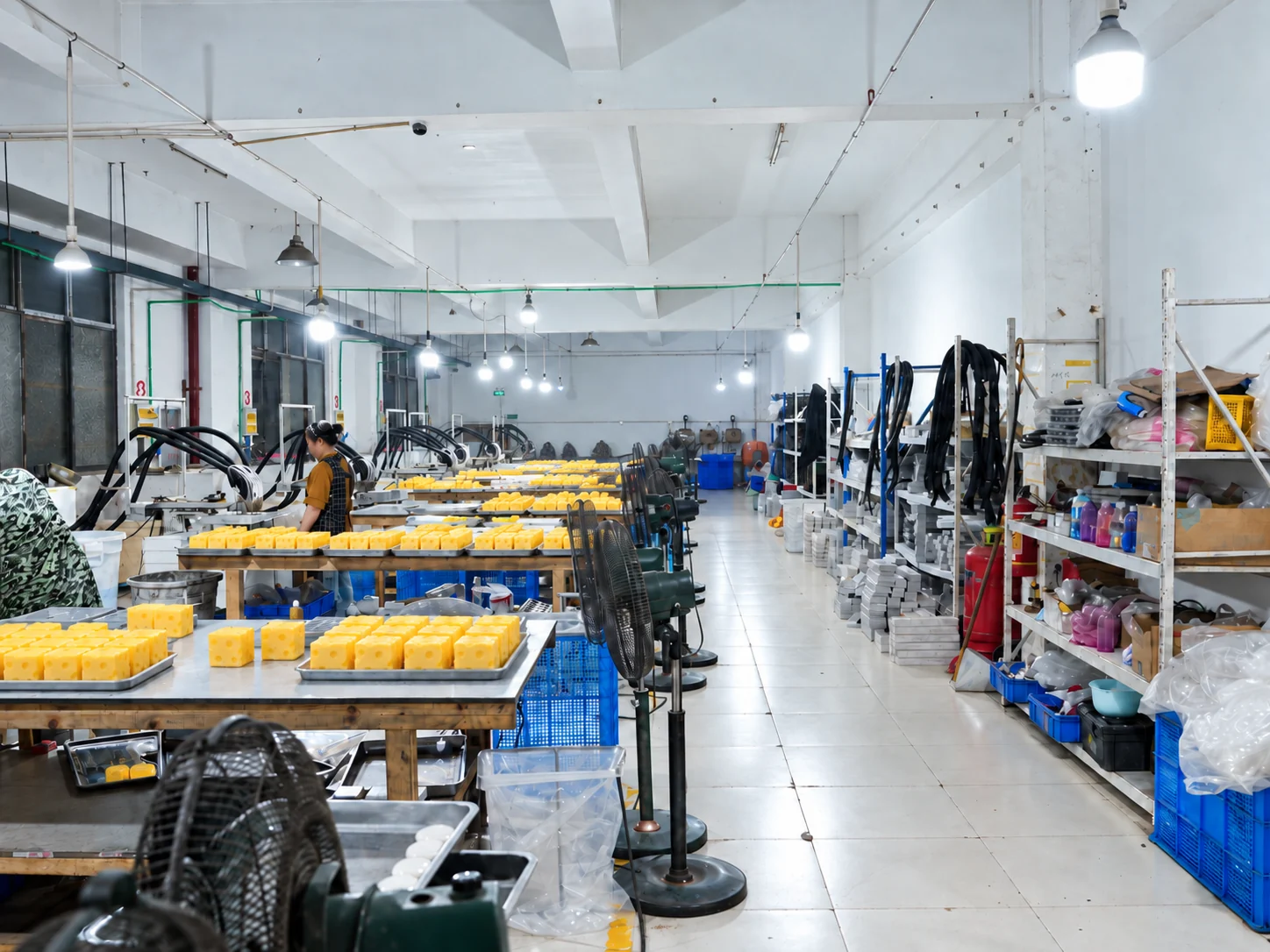
Know who is selling and who is producing
Ask for the legal seller’s name and address, the proposed production location and which parts of the work would be outsourced. Also establish who will handle specifications, approve changes with you and respond when something goes wrong.
The seller and producer may be different businesses. That needs an explanation, but it is not automatically evidence of misconduct. Factory ownership and outsourcing arrangements alone do not tell you whether a supplier is suitable or whether the product will meet your requirements.
What matters for your decision is whether the arrangement is clear enough to manage. If a design needs changing, who checks feasibility with production? If the delivered product differs from the agreed version, who takes responsibility for investigating and responding? An unresolved answer here should remain a reason to pause selection.
Listen for answers about your actual product
Give candidates the same reference, dimensions, desired feel, quantity per design, destination and packaging expectations. This makes their replies easier to compare. If those details are still scattered across messages, the bulk squishy toy inquiry guide can help you prepare a consistent starting brief.
A useful reply explains the proposed construction, which changes may be possible, what remains unresolved and what the next sampling step would establish. An immediate “yes” without that explanation leaves the important questions open.
For example, consider these hypothetical replies:
- “Yes, we can make this. Please send your order quantity.”
- “We propose this construction for the reference shown. The requested feel is still to be checked, and the decoration would differ from the pictured version. The next sample would let you assess those points.”
The second reply gives you something to evaluate. It does not prove capability by itself, but it identifies the proposed version and the work still needed before you can choose confidently.
Keep a good sample in perspective
A sample is useful evidence only when you know what it represents. Label its version and options. A sample with a different fill, decoration or package may answer a limited question about the project without approving the final order.
Ask how revisions and your decisions will be linked to the version used for bulk production. You should be able to follow the connection between what you reviewed, what changed and what the supplier proposes to make. The squishy toy sample approval checklist covers that review in more detail.
Then ask how production units will be compared with the agreed sample and specifications, who records discrepancies and what happens when units fail the agreed checks. One good sample does not establish that the whole later batch will meet those requirements.
Read audits, test reports and certificates for their scope
These documents serve different purposes. QIMA’s explanation of manufacturing audits describes assessments of facilities, capabilities, systems and workflows. Product inspections check products against specifications and quality criteria. A manufacturing audit is neither a product test report nor a guarantee that every unit will be acceptable.
For any document offered, check the named business or product, issuer, date, scope and connection to the quoted item. A logo or certificate photo does not provide enough information to establish coverage.
Product identification matters. As one specific example, CPSC’s Children’s Product Certificate guidance says the description must identify the products covered by the certificate and no others. This illustrates the need to identify the covered product; it is not a complete US import checklist or a rule for every destination.
If a document names another model or version, request a documented explanation of coverage and verify it with the issuer or a testing specialist. Requirements vary with the product, intended use and destination. A material name, sample or generic certificate cannot prove complete compliance.
Decide which open questions prevent an order
Before selecting a supplier, clarify the minimum quantity for your exact design and how quantities can be split. Establish sample costs and revisions, included packaging or development work, production and dispatch milestones, and responsibility for problems. Production completion, dispatch and arrival are different dates; a quoted schedule should make clear which one it describes.
There is no universal minimum quantity, price or lead time that makes a supplier suitable. Compare the answers against your project, marking important points as confirmed, still open or unsuitable. Keep unresolved identity, product version, document coverage and correction responsibility visible. A lower price does not resolve them.
Bulk Squishy Toys handles custom wholesale inquiries. To discuss a custom squishy toy quote, send product references, estimated quantities and the destination, along with any size, color or packaging requests. Available options, samples, quantities, costs and schedules are confirmed for each project.

