
Squishy toys are made by forming a body or shell, allowing the material to cure or cool, and then finishing, inspecting and packing the toy. Filling is a separate step only for designs that need it. A molded foam squishy, a filled thermoplastic shell and a cast silicone body follow different manufacturing routes.
For retailers, importers and brand buyers, the useful question is which route applies to the design being ordered and what the finished sample should demonstrate. The examples below explain those differences; they do not establish which manufacturing processes Bulk Squishy Toys uses for a particular product.
Before molding: define the shape and the feel
A product reference or concept gives the discussion a starting point. Shape, dimensions, squeeze feel and decoration are separate decisions: a photograph can show appearance, while a rigid shape model cannot prove how the finished toy will feel.
You can browse squishy toy designs to identify a reference, then specify the dimensions and feel you want. A new shape requires a discussion about tooling feasibility. A change to color or packaging does not automatically require new tooling.
Three manufacturing routes, with different results
| Construction | How the body takes shape | Separate filling? |
|---|---|---|
| Molded polyurethane (PU) foam | Liquid components expand and cure inside a mold. | No separate liquid filling is needed. |
| Filled thermoplastic shell | The shell is molded, cooled and prepared for filling. | Yes, for this construction. |
| Solid cast silicone | A suitable silicone mixture cures in a mold. | No, for this solid-body route. |
Molded PU foam: expansion forms the body
Measured liquid foam components are mixed and placed in a mold. The mixture expands and cures into a flexible body with a cellular structure. The foam itself forms the squishy body; it does not need a separate liquid filling to become squeezable.
Smooth-On’s flexible foam product information documents this principle. Its mixing ratios and processing times belong to that specific material, so they should not be treated as instructions for every foam squishy or as specifications for Bulk Squishy Toys products.
A filled thermoplastic shell: molding comes before filling
Thermoplastic elastomer (TPE) can be heated until it flows, injected into a mold and cooled into shape, as described in Avient’s explanation of thermoplastic elastomer molding. Thermoplastic rubber (TPR) belongs to the broader thermoplastic elastomer family.
For a filled-shell design, making the shell and adding the contents are separate operations. One TPR production route forms and trims the shell, introduces filling through an opening and then closes it. The filling and closure depend on the design; there is no single plug, adhesive or sealing method that describes every filled squishy.
The shell and closure work together to contain the filling. Compare the completed, filled toy rather than judging an empty shell or a product photograph.
Solid cast silicone: the material cures in the mold
For one solid-body route, suitable two-part silicone is mixed, placed in a mold, allowed to cure and removed. This describes a cast silicone body, not every possible silicone toy construction.
Smooth-On’s two-part silicone example is a pourable material that cures at room temperature. It illustrates the process only: it is not a toy-material recommendation, a certification or evidence of a universal curing time.
Does a silicone mold mean the toy is silicone?
No. The mold material and the finished toy material are different things. A silicone mold can be used to cast polyurethane foam. In that case, the toy body is foam even though the mold is silicone. When confirming a product, ask what the finished body or shell is made from.
After molding: finishing, inspection and packing
Finishing may involve trimming excess material and adding decoration. Some designs get their color from the material itself; others have surface details added afterward. A decorated squishy is therefore not necessarily hand-painted, just as a squeezable toy is not necessarily filled.
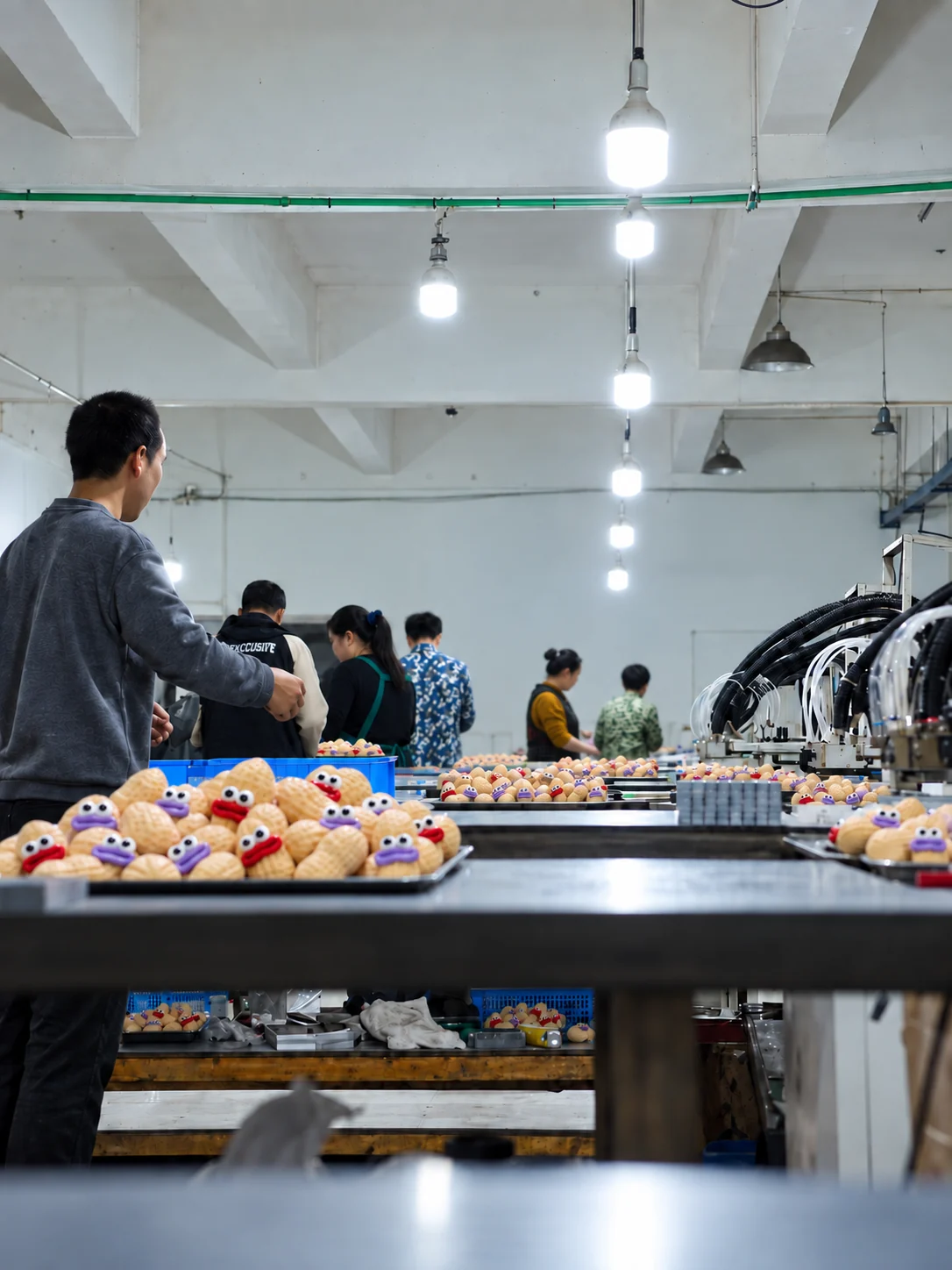
Inspection can compare the finished shape, surface and function with the agreed version. For filled toys, that comparison needs to include the completed construction. A squeeze demonstration shows how a sample behaves during that demonstration; it does not establish long-term durability.
Appearance and function checks also do not replace the testing or documents required for the specific product. Before packing, confirm the agreed finished version, quantities, labels and packing arrangement.
Approve a finished sample and agree the schedule
A finished sample brings the decisions together: dimensions, surface appearance, squeeze feel and, where applicable, filling and closure. Use the squishy toy sample approval checklist to review the exact version you intend to order.
Curing forms the material. Recovery describes what the finished toy does after you squeeze and release it. A longer cure does not by itself mean slower recovery, and the label “PU foam” does not guarantee a particular recovery speed. Evaluate the sample’s behavior directly.
Likewise, a short molding or curing cycle is not the full order lead time. Development, samples, finishing and packing also contribute to the schedule.
Bulk Squishy Toys handles custom bulk orders rather than individual retail purchases. To discuss a custom bulk order, provide a reference or concept, estimated quantity, destination, dimensions and desired feel. Feasibility, quantity requirements, timing and proposed changes need confirmation for the individual order.

