
A slow-rising squishy returns gradually toward its original shape after you release a squeeze. The appeal may be watching that change unfold; someone else may prefer a toy that is ready for another squeeze sooner. For a retailer, importer or brand choosing a custom product, the useful question is which experience suits the intended customer.
“Slow-rising” describes recovery behavior. It does not specify the complete material, a fixed recovery time, a softness grade or a level of quality. To choose well, compare how the sample feels during a squeeze and how it recovers afterward as separate observations.
Appearance cannot tell you how a squishy recovers
A photograph can help you compare shape, color and visible finish, but it cannot show recovery. Two toys with similar outlines may behave differently when handled. Even watching a toy return to shape does not reveal its complete composition.
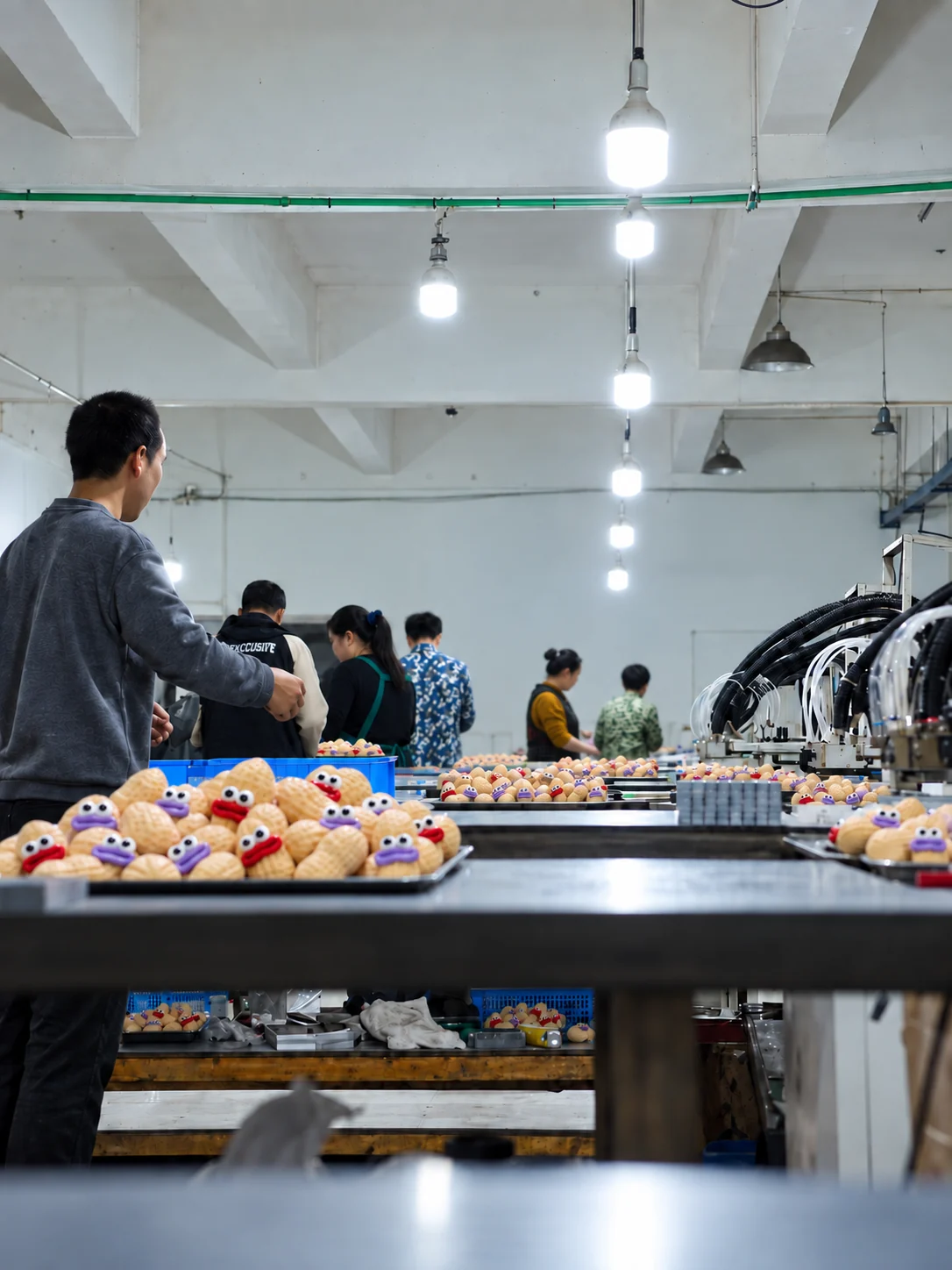
The wider squishy category includes different body constructions and fillings. If you need to understand a particular product, ask for its body or shell description and its filling separately. The guide to squishy body materials and fillings explains that distinction; the introduction to what squishy toys are covers the broader category.
Slow-rise labels need a shared meaning
Labels such as “slow,” “medium” and “super slow” are only useful when you know what the seller means by them. Ask which sample represents each label and what handling method was used. A faster-rising reference should return sooner than a slower one when both are compared under the same defined conditions.
A recovery number taken from an unrelated product is a poor acceptance threshold for a new shape or version. It may describe a different squeeze, a different endpoint or different room conditions. Start with identified samples, choose the experience you prefer, and then agree how that behavior will be compared.
Firmness and recovery answer different questions
Firmness concerns the resistance you encounter while compressing a toy. Recovery concerns what happens after release. A timing result cannot tell you how much effort the squeeze takes or how the surface feels in your hand.
Record both qualities separately. That allows a buyer to say, for example, that a sample’s return is appealing but its compression resistance needs further discussion. A single “soft and slow” description can hide that difference. Likewise, a slower return does not establish better durability, safer construction or a more acceptable finish. Neither a slow nor a fast return proves a therapeutic benefit.
Why some viscoelastic foam changes in colder conditions
The Polyurethane Foam Association’s explanation of viscoelastic foam describes an open-cell flexible polyurethane foam that recovers gradually after compression. Its formulation can alter recovery and firmness, while ambient temperature and humidity can change measured properties. In colder conditions, this type of foam can feel firmer and recover differently.
That explanation applies to viscoelastic polyurethane foam. It should not be extended to every squishy toy or taken as a description of a Bulk Squishy Toys product. Confirm the exact construction before using a material explanation to interpret what you feel. Follow the specific product’s instructions, and do not heat, freeze, stretch, puncture or cut a toy to change or identify its recovery behavior.
Compare samples with the same recovery endpoint
First identify each sample and its version. Following its handling instructions, compare samples in the same room conditions after an agreed rest period. Keep the compression location, orientation, depth and hold duration comparable. These choices give the comparison a shared basis without imposing one handling method on every toy.
Before timing, decide what “recovered” means. Returning to an agreed outline and losing the last small crease are different endpoints. Imagine one observer stopping when the outline looks restored while another waits for a remaining crease to disappear. Their results cannot be directly ranked, even if they watched the same squeeze.
Start timing at release and let the sample recover without reshaping it. For repeat handling, stay within the product instructions and use consistent rest between comparisons. Record the range of observed results, with any persistent shape difference noted separately. One return gives less information than a comparison that shows how observations vary.
An unedited side-on video can make the result easier to discuss when it uses the same framing, visible timing and a stated handling method. A hand comparison still does not control force like a calibrated method. It is an informal product comparison, not a certified laboratory or safety test, and cannot by itself substantiate an advertised numerical performance claim.
Keep the chosen behavior tied to the finished sample
Evaluate the exact finished sample alongside its proposed packaging. A loose sample does not establish how a version with a different construction, size or finish will behave. It also does not show whether the packaging fits without unwanted compression. When a version changes, review the characteristics affected by that change.
Retain the approved sample’s identity and version, the agreed handling method and recovery endpoint, the observations or video, and the corresponding packaging reference. The sample approval guide can help connect those details to the version being approved.
To discuss a custom bulk project with Bulk Squishy Toys, send a shape reference, size, quantity, destination and a description of the squeeze and recovery experience you want. Construction options, achievable behavior, samples and terms need confirmation for the specific project.

